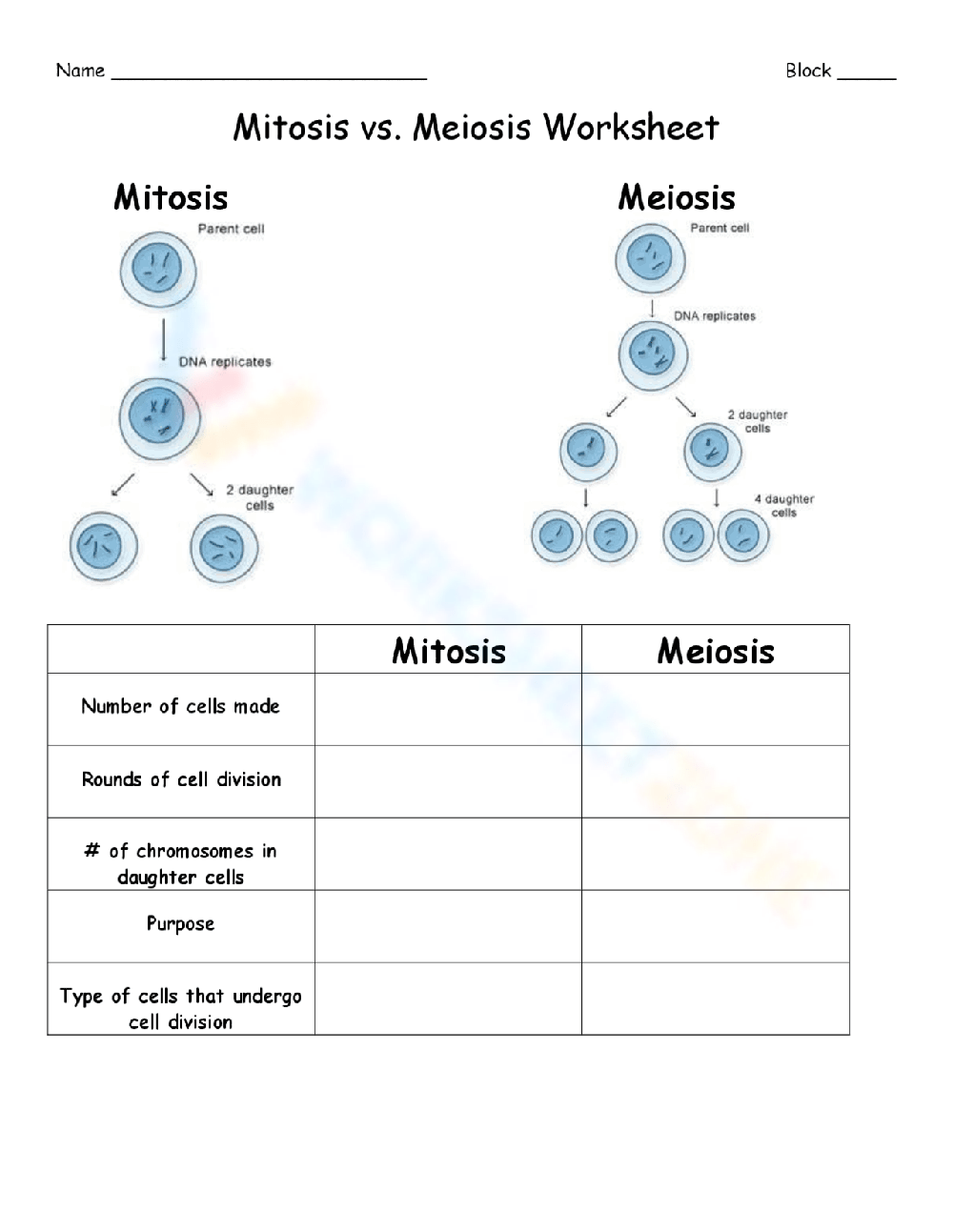
Cell division is a fundamental process in biology that is essential for growth, development, and reproduction. There are two main types of cell division: mitosis and meiosis. Mitosis is the process of cell division that results in two daughter cells that are genetically identical to the parent cell, while meiosis is the process of cell division that results in four daughter cells that are genetically unique. Understanding the differences between mitosis and meiosis is crucial for students of biology and related fields.
The process of cell division is complex and involves multiple stages, including prophase, metaphase, anaphase, and telophase. In mitosis, the cell divides into two daughter cells that have the same number of chromosomes as the parent cell, while in meiosis, the cell divides into four daughter cells that have half the number of chromosomes as the parent cell. This fundamental difference between mitosis and meiosis has significant implications for the process of reproduction and the transmission of genetic traits from one generation to the next.
Printable Mitosis Verses Meiosis Worksheets
Understanding Mitosis and Meiosis
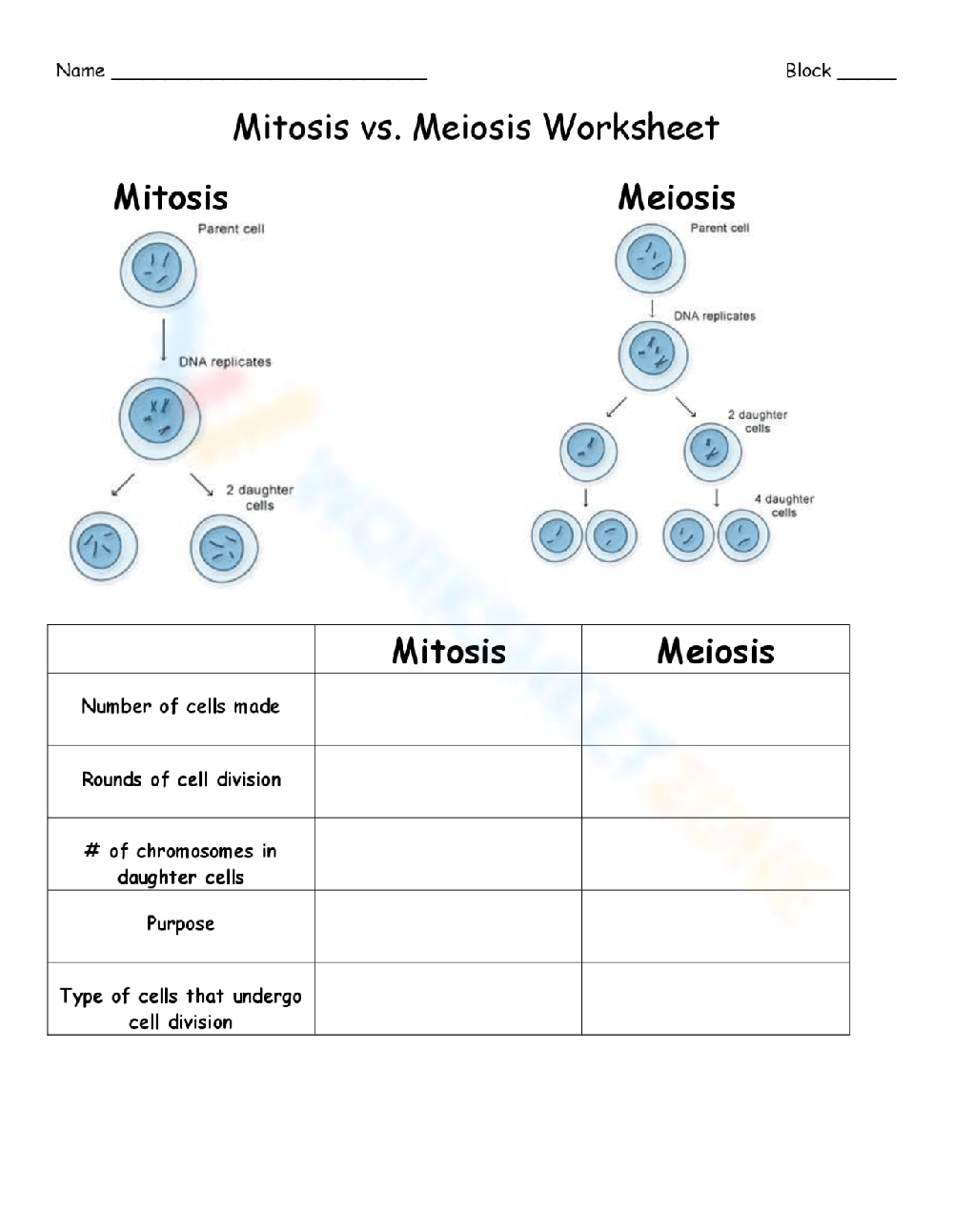
Mitosis and meiosis are two distinct processes that are essential for the survival and reproduction of living organisms. Mitosis is responsible for the growth and development of tissues and organs, while meiosis is responsible for the production of gametes (sperm and egg cells) that are necessary for reproduction. Understanding the key differences between mitosis and meiosis is essential for appreciating the complexity and beauty of the biological world. By using a Mitosis Vs Meiosis worksheet, students can gain a deeper understanding of these processes and develop a stronger foundation in biology.
Printable Mitosis Verses Meiosis Worksheets
Key Differences Between Mitosis and Meiosis
The main differences between mitosis and meiosis lie in the number of cell divisions, the number of daughter cells produced, and the genetic uniqueness of the daughter cells. In mitosis, there is one round of cell division that results in two daughter cells that are genetically identical, while in meiosis, there are two rounds of cell division that result in four daughter cells that are genetically unique. Additionally, meiosis involves the process of crossing over, which increases genetic diversity by exchanging genetic material between homologous chromosomes. By understanding these key differences, students can better appreciate the significance of mitosis and meiosis in the biological world.
Benefits of Using a Mitosis Vs Meiosis Worksheet
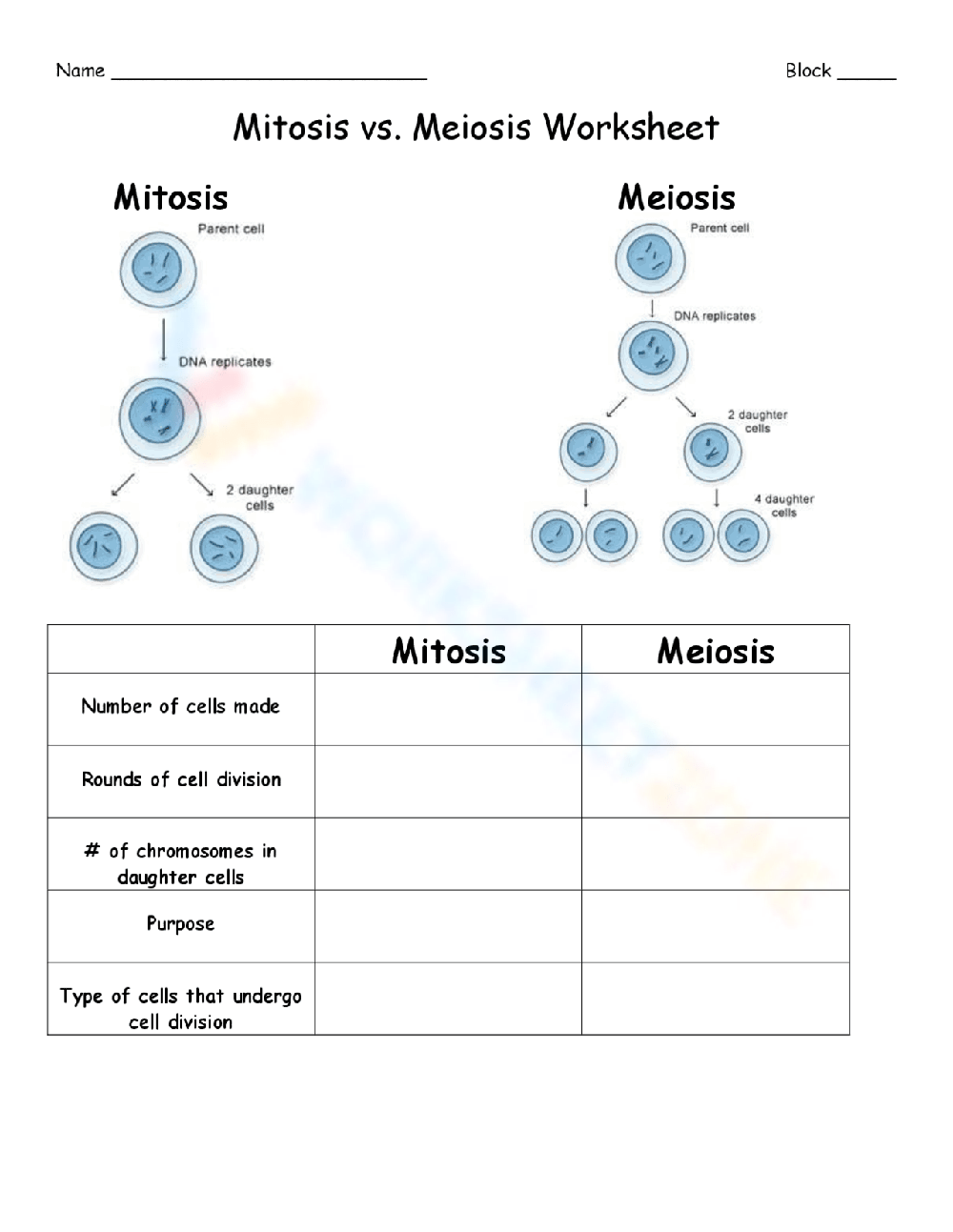
Using a Mitosis Vs Meiosis worksheet can have numerous benefits for students of biology. For one, it provides a comprehensive overview of the two processes, highlighting their key similarities and differences. Additionally, it allows students to visualize the complex stages of cell division and understand how they fit together to produce the final daughter cells. By working through a Mitosis Vs Meiosis worksheet, students can develop a deeper understanding of the biological processes that underlie growth, development, and reproduction, and gain a stronger foundation in biology. Furthermore, the worksheet can be used as a study guide or a teaching tool, making it a valuable resource for educators and students alike.
Printable Mitosis Verses Meiosis Worksheets
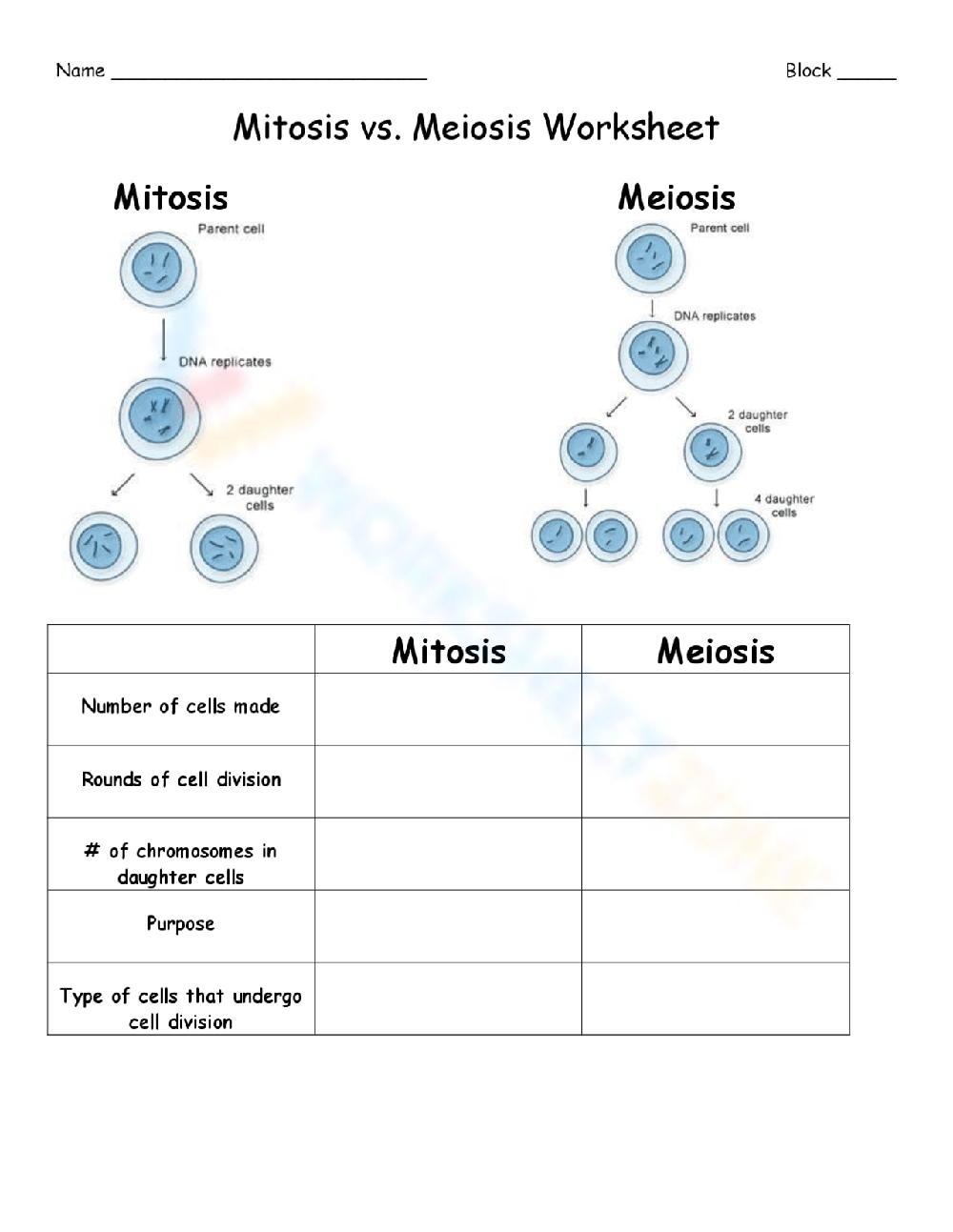
In conclusion, the Mitosis Vs Meiosis worksheet is a valuable resource for students of biology who want to gain a deeper understanding of the complex processes of cell division. By providing a comprehensive overview of mitosis and meiosis, the worksheet helps students to visualize the key stages of cell division and understand the significant differences between the two processes. Whether used as a study guide or a teaching tool, the Mitosis Vs Meiosis worksheet is an essential resource for anyone looking to unravel the mysteries of cell division and develop a stronger foundation in biology.
Printable Mitosis Verses Meiosis Worksheets
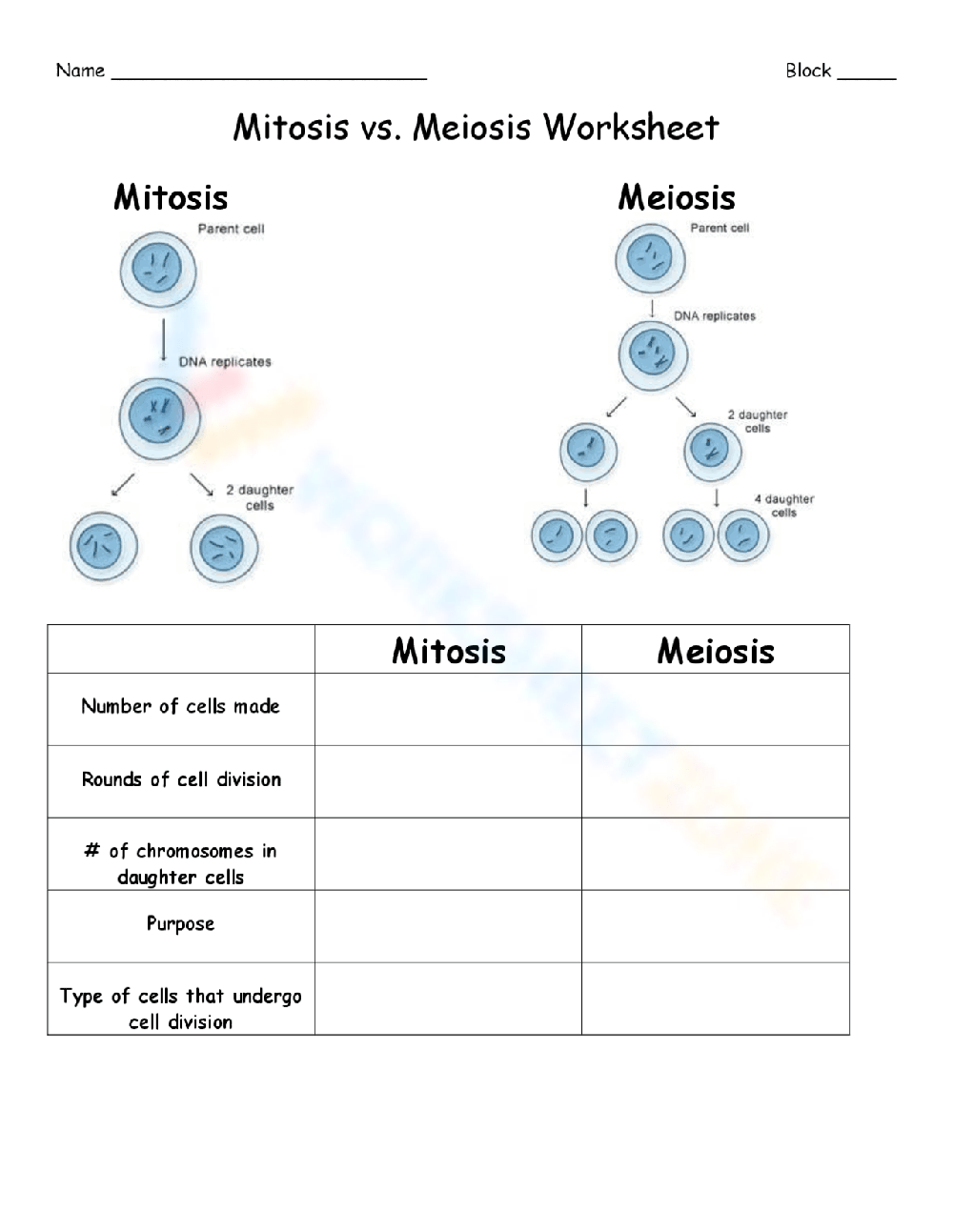
Printable Mitosis Verses Meiosis Worksheets